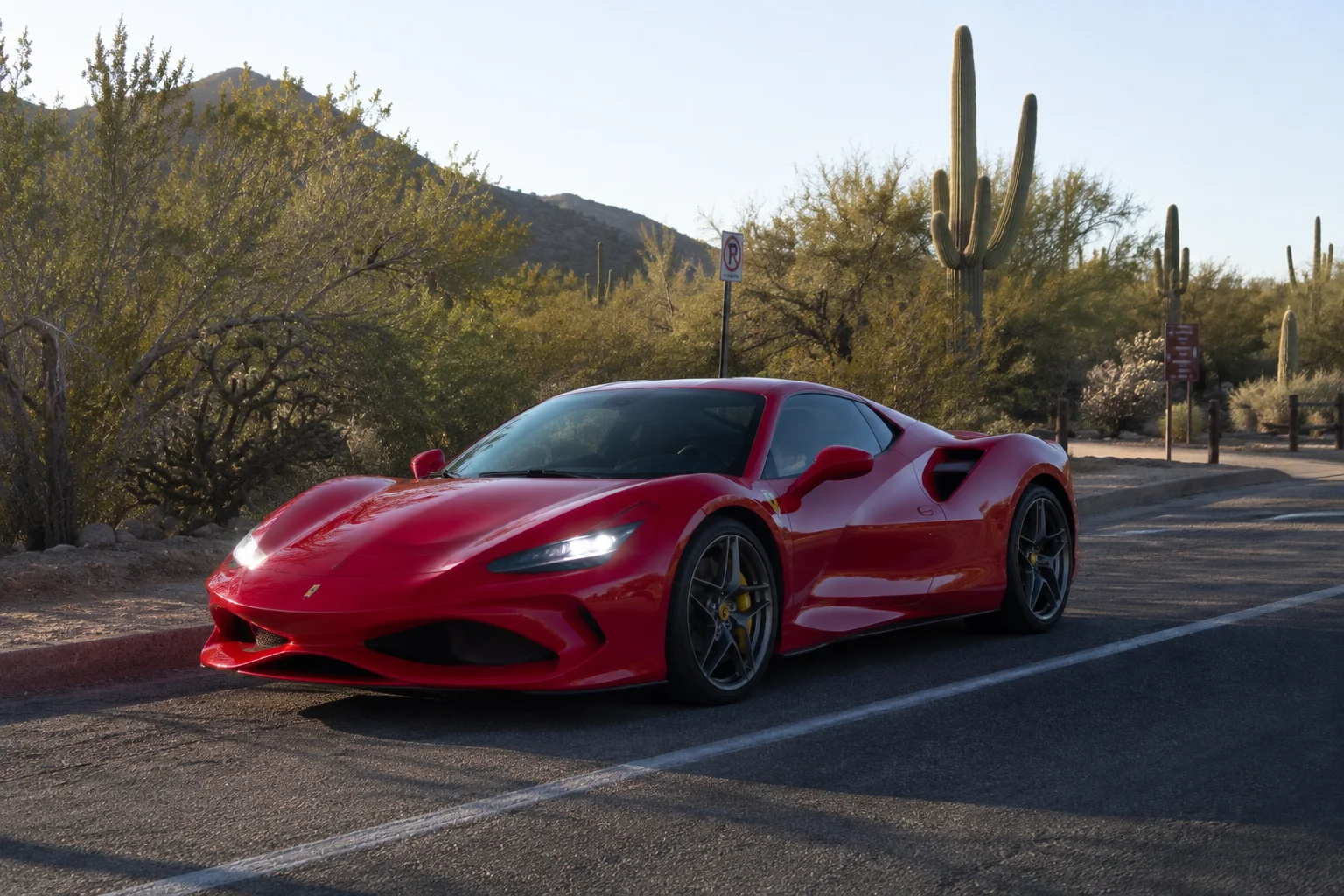
So you've picked out the car. Maybe it's a Ferrari F8 Tributo, maybe it's a Lamborghini Huracán, maybe it's a Rolls-Royce Cullinan for a wedding weekend. Before any of that happens, there are a handful of requirements every exotic and luxury car rental company has to enforce — not because they're being difficult, but because insuring a quarter-million-dollar vehicle works differently than insuring a compact sedan.
Here's what actually determines whether you can drive off the lot, whether you're renting in Las Vegas, Scottsdale, or Boise.
Who Can Rent a Supercar
Age is the first filter. Most exotic car rental companies, Supercar Experience included, set the minimum age at 25. Renters between 21 and 24 can usually still book, but expect an underage driver fee (around $299) added to the rental. This isn't arbitrary — insurers price high-performance vehicles based on driver risk data, and drivers under 25 statistically carry more of it, so the surcharge offsets what the rental company pays to keep the car covered.
Beyond age, you'll need:
A valid driver's license (a U.S. license works for U.S. renters; international visitors typically need their passport plus an international driving permit if their license isn't in the Roman alphabet)
A major credit card in the primary driver's name for the security deposit
Insurance that meets the rental company's minimum coverage requirements
That last one trips up more first-time renters than anything else.
The Insurance Piece Nobody Explains Well
Every legitimate exotic car rental requires full coverage insurance — comprehensive, collision, and liability — on every single rental, for U.S. and international drivers alike. This is where "I have full coverage on my Civic" and "I have full coverage that actually protects a $250,000 Lamborghini" turn out to be two very different things.
The Coverage Gap, Explained
Most personal auto policies only cover a rental up to the value of the most expensive car already on that policy. So if your policy's highest-valued vehicle is worth $60,000 and you rent a supercar with an Actual Cash Value of $250,000, you're carrying a $190,000 gap. If something happens to the car during your rental, that gap is your financial exposure — not the rental company's.
This is exactly why reputable rental companies verify your policy before handing over keys, and why supplemental or excess insurance coverage exists as an add-on. It's not an upsell tactic; it's closing a real hole in your protection.
If You Don't Have Qualifying Insurance
International visitors, uninsured drivers, or anyone whose policy doesn't meet the threshold aren't out of luck — they just need to purchase supplemental coverage through the rental company at booking. It adds a line item to the total cost, but it's the difference between a fun day behind the wheel and a financial disaster if the worst happens.
Deciding Between a 4-Hour Block and a Full Day
Most exotic and luxury rentals are structured as either a short block (commonly 4–5 hours) or a full 24-hour day. The math is usually straightforward: a 4-hour block is ideal for a Strip cruise, a date night, or a single scenic drive, while a full day makes sense if you're doing multiple stops, a road trip out of the city, or simply don't want to watch the clock. Many companies also run promotions on multi-day bookings — second-day discounts or a free day when you book three — so it's worth asking before you lock in a single block.
Protection Upgrades Worth Actually Considering
Beyond the required insurance, most rental companies offer optional add-ons. A few are worth a real look rather than an automatic decline:
Prepaid Fuel
Covers the tank so you don't need to hunt for a gas station before drop-off. Skip it, and running the car back empty typically costs far more per gallon than you'd pay at the pump.
Wheel, Door, and Windshield Waiver
This one earns its cost. A single curb rash on a set of exotic wheels can run $500–$1,000 to repair. A windshield replacement on some models can climb into five figures. A waiver in the few-hundred-dollar range against those numbers is cheap insurance against the most common — and most avoidable — kind of damage.
Loss of Use Waiver
Waives your responsibility for the rental company's lost income while a damaged car is out of service for repairs. It's the one cost most first-timers don't think about until it's explained to them.
Bundled Packages
Booking every add-on individually almost always costs more than a bundled "all-in" protection package. If you're renting for a special occasion and want zero what-ifs, ask about the bundle before you build it piece by piece.
Booking Across Three Cities
Requirements stay consistent whether you're picking up in Las Vegas, Scottsdale, or Boise — age, license, and insurance don't change city to city. What does change is inventory and demand. Vegas carries the largest fleet and the most exotic-tier availability given the volume of bachelor parties, weddings, and events passing through. Scottsdale and Boise run smaller, curated selections, so booking a specific model — say, a Lamborghini Urus for a golf weekend or a G-Wagon for a mountain drive — further in advance matters more in those markets.
Before You Book
If there's one habit that separates a smooth first rental from a frustrating one, it's asking questions before you show up: confirm your insurance qualifies, ask what the deposit hold looks like on your card, and get clear on the mileage policy. Companies like Supercar Experience walk renters through exactly what their policy covers before the day of pickup — which means the only surprise left is how loud that V8 actually is when you start it.